
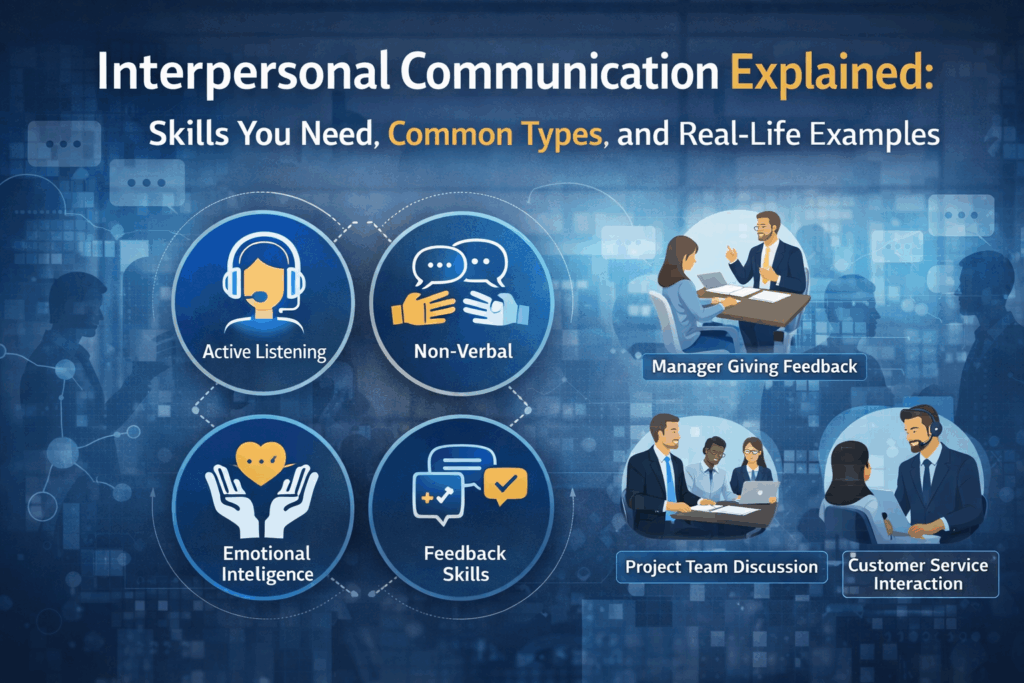
Interpersonal communication is a fundamental skill that shapes how we interact with others in both personal and professional settings. From workplace discussions to daily conversations, the way we communicate directly impacts relationships, teamwork, and career growth. In today’s collaborative and people-driven work culture, strong interpersonal communication skills are more important than ever.
What Is Interpersonal Communication?
Interpersonal communication refers to the exchange of information, thoughts, feelings, and ideas between two or more people. It can take place through spoken words, written messages, body language, facial expressions, and tone of voice. Effective interpersonal communication involves not only speaking clearly but also listening actively and responding appropriately.
In professional environments, interpersonal communication plays a crucial role in collaboration, leadership, conflict resolution, and customer interactions.
Key Interpersonal Communication Skills
Developing strong interpersonal communication requires a combination of verbal and non-verbal skills. Some of the most important ones include:
1. Active Listening
Listening attentively without interrupting shows respect and helps you understand others more clearly.
2. Verbal Communication
Expressing ideas clearly, confidently, and respectfully helps avoid misunderstandings.
3. Non-Verbal Communication
Body language, eye contact, gestures, and facial expressions often communicate more than words.
4. Emotional Intelligence
Understanding and managing emotions—both yours and others’—improves communication and empathy.
5. Feedback Skills
Giving and receiving constructive feedback helps build trust and improve performance.
Types of Interpersonal Communication
Interpersonal communication can take several forms depending on the situation:
1. One-on-One Communication
Direct communication between two individuals, such as a manager and employee discussion.
2. Group Communication
Occurs in team meetings, brainstorming sessions, or group discussions.
3. Formal Communication
Structured communication such as presentations, interviews, and official meetings.
4. Informal Communication
Casual conversations, chats, and social interactions that build rapport and relationships.
Real-Life Examples of Interpersonal Communication
- A manager giving performance feedback to a team member
- A customer service executive resolving a client concern
- Team members collaborating during a project meeting
- A job interview discussion between a candidate and recruiter
- Negotiating deadlines or responsibilities with colleagues
Each of these situations requires clarity, empathy, and effective listening.
Why Interpersonal Communication Is Important
Strong interpersonal communication skills lead to:
- Better teamwork and collaboration
- Stronger professional relationships
- Improved leadership and conflict resolution
- Higher workplace productivity
- Greater career growth opportunities
In many roles, communication skills are just as valuable as technical expertise.
Final Thoughts
Interpersonal communication is more than just talking—it’s about understanding, connecting, and responding effectively. Whether you’re a student, professional, or leader, improving these skills can positively impact both your career and personal life.
By practicing active listening, being aware of non-verbal cues, and communicating with clarity and empathy, you can build stronger relationships and succeed in any environment.
FAQs – Interpersonal Communication
1. What is interpersonal communication?
It is the exchange of ideas, information, and emotions between people using verbal and non-verbal methods.
2. Why are interpersonal communication skills important?
They help improve relationships, teamwork, leadership, and workplace effectiveness.
3. What skills are part of interpersonal communication?
Active listening, clear speaking, body language, emotional intelligence, and feedback skills.
4. What are the types of interpersonal communication?
One-on-one, group, formal, and informal communication.
5. How does interpersonal communication help at work?
It improves collaboration, reduces conflicts, and increases productivity.
Explore: Digitallove.in
Address: 2nd Floor, 50 Feet Main Road, 2nd Stage, Kumaraswamy Layout, Bengaluru, Karnataka – 560111
Business Hours: Mon–Sat : 10:00 AM – 7:00 PM Sunday : Closed
